By the Best Mountain Hotels editorial team ·
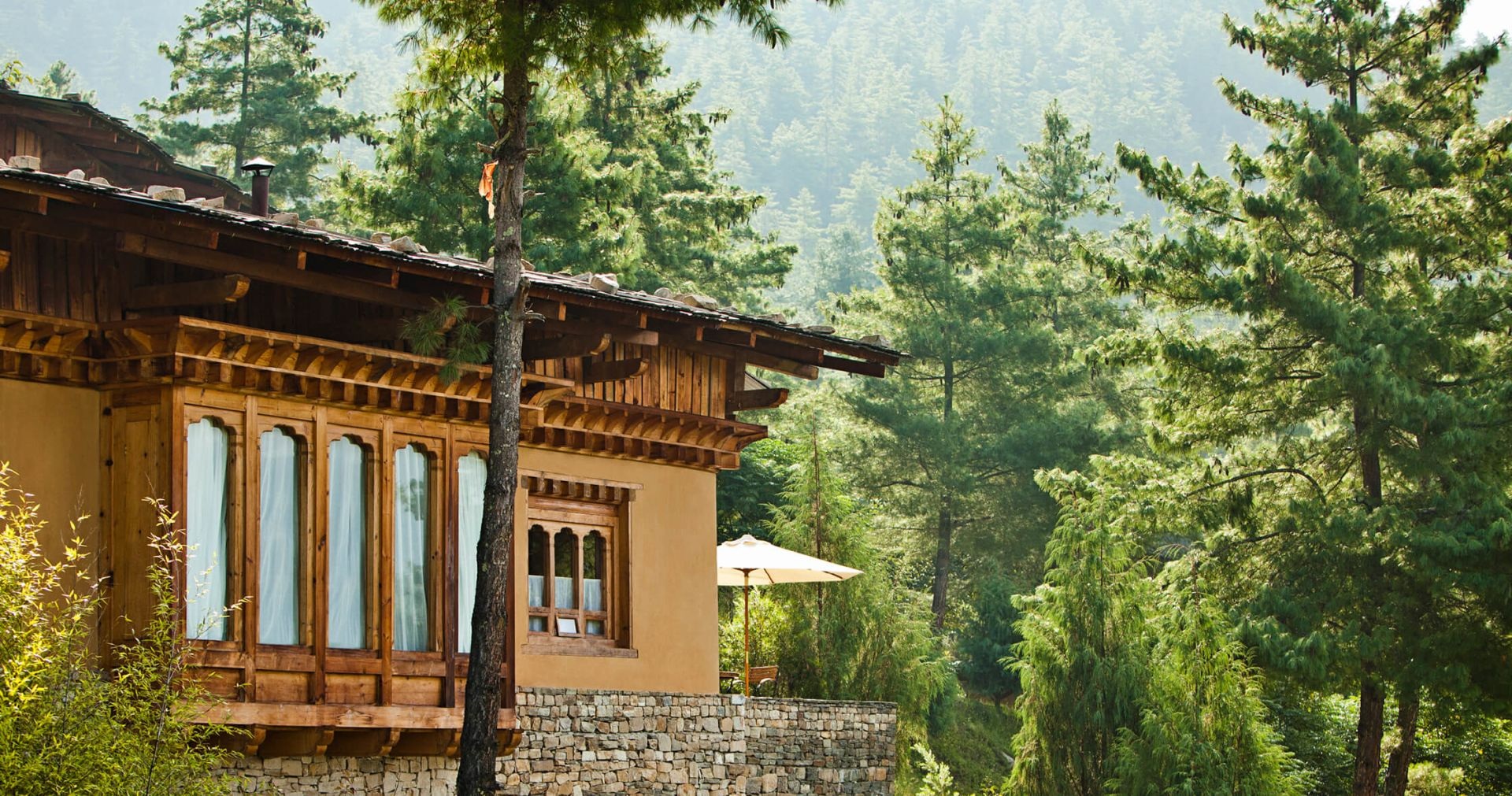
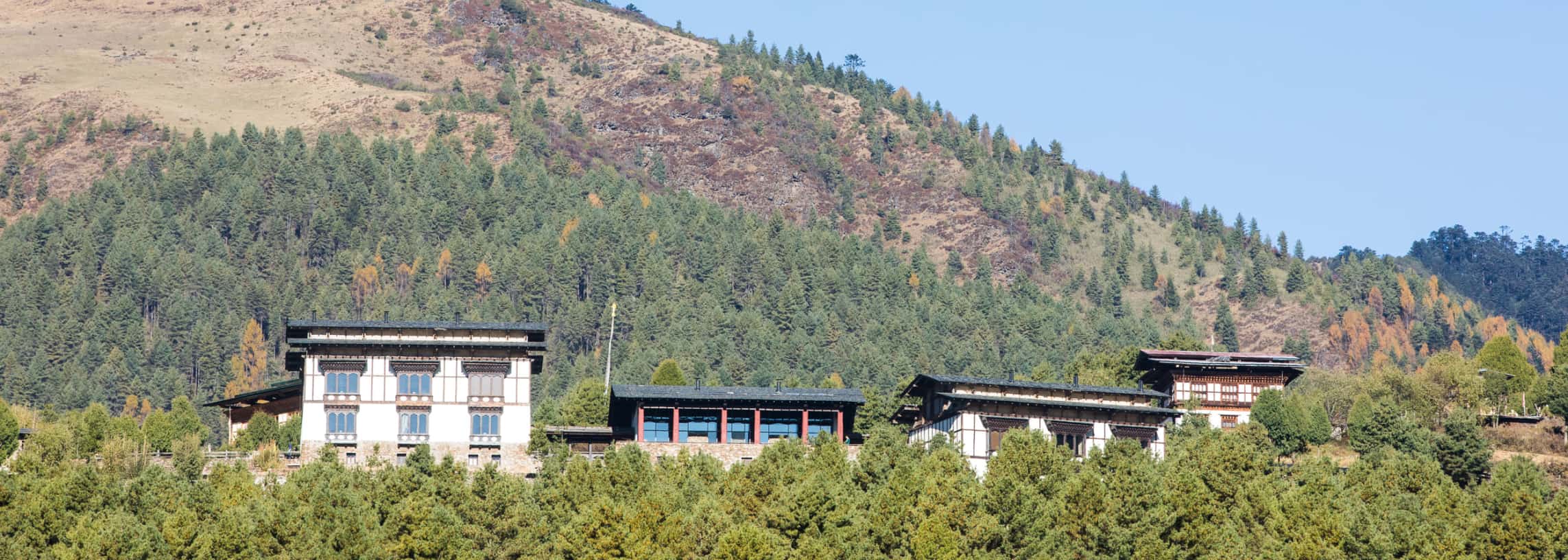
Gangtey Lodge is one of the most romantic places to stay in Bhutan, a small farmhouse-style lodge on a hillside above the Phobjikha Valley, just below the 17th-century Gangtey Monastery. With only 12 suites, each with a wood-burning stove and a bathtub facing the valley, it feels less like a hotel than a warm, beautifully run mountain home. In winter, the wide glacial valley below becomes the roosting ground of the rare black-necked crane, one of the most moving wildlife spectacles in the Himalayas.
Gangtey Lodge is one of the most romantic places to stay in Bhutan, a small farmhouse-style lodge on a hillside above the Phobjikha Valley, just below the 17th-century Gangtey Monastery. With only 12 suites, each with a wood-burning stove and a bathtub facing the valley, it feels less like a hotel than a warm, beautifully run mountain home. In winter, the wide glacial valley below becomes the roosting ground of the rare black-necked crane, one of the most moving wildlife spectacles in the Himalayas.
Location: Phobjikha Valley, Bhutan
The Phobjikha Valley lies at around 3,000 metres in central Bhutan, on the western slopes of the Black Mountains. It is a broad, bowl-shaped glacial valley of marshland, potato fields and scattered farmhouses, ringed by forests of blue pine, and it is one of the most important conservation areas in the country. Gangtey Lodge stands on the hillside at the head of the valley, a short walk below Gangtey Goenpa, the great monastery that has watched over Phobjikha since the 17th century.
Getting here is part of the experience. The drive from Paro, Bhutan's international airport, takes around five to six hours, crossing the Dochula Pass with its 108 memorial chortens and views of the high Himalaya on clear days, then winding down through Wangdue and up into the valley. Helicopter transfers can also be arranged. As with all travel in Bhutan, most visitors come on a planned itinerary with a licensed guide and driver, and pay the government's daily Sustainable Development Fee.
Suites at Gangtey Lodge
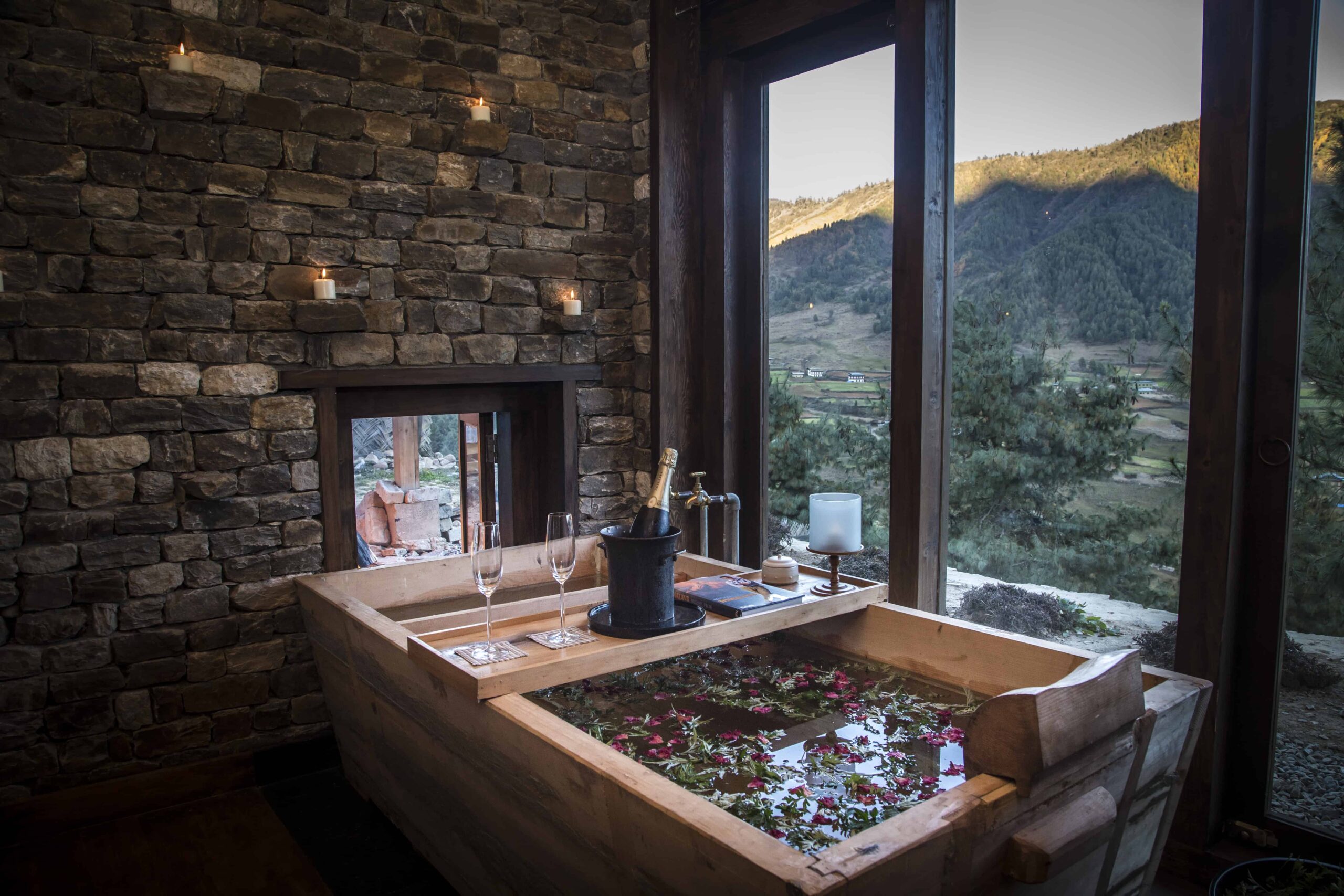
There are just 12 suites, all similar in size and style, which is part of the lodge's charm: nobody gets the 'wrong' room. Each one is built in the manner of a Bhutanese farmhouse, with heavy timber beams, earthen walls and local stone, and each faces the valley through large windows. A freestanding roll-top bathtub sits beside the glass, so you can soak while watching the mist lift off the marshes below.
The details are designed for cold mountain nights. Floors are heated, a log-burning stove is lit for you in the evening, and a hot water bottle appears in the bed at turndown. There are no televisions, which suits the setting perfectly. Three suites are on the ground floor, useful for anyone who prefers to avoid stairs at this altitude.
Facilities at Gangtey Lodge
The heart of the lodge is its main building, with a soaring beamed ceiling, stone walls, fires and floor-to-ceiling windows framing the valley. Meals are served here or on the terrace, and the kitchen offers both a set Bhutanese menu, with dishes such as ema datshi, the national dish of chillies and cheese, and a more international choice, using produce grown at the lodge and in the valley. There is no formal bar, but a wine list and a spirits table in the lounge.
The spa is a separate timber-and-stone bath house, where the signature experience is a traditional Bhutanese hot stone bath, or dotsho: a wooden tub for two filled with mineral water heated by river stones from an open fire, often scented with local herbs. Massages are offered in the spa or in your suite. Beyond the lodge, the staff can arrange archery, the national sport of Bhutan, guided hikes and mountain biking, cooking lessons, farmhouse visits and blessings or evening prayers with the monks of Gangtey Monastery.
The mountain moment
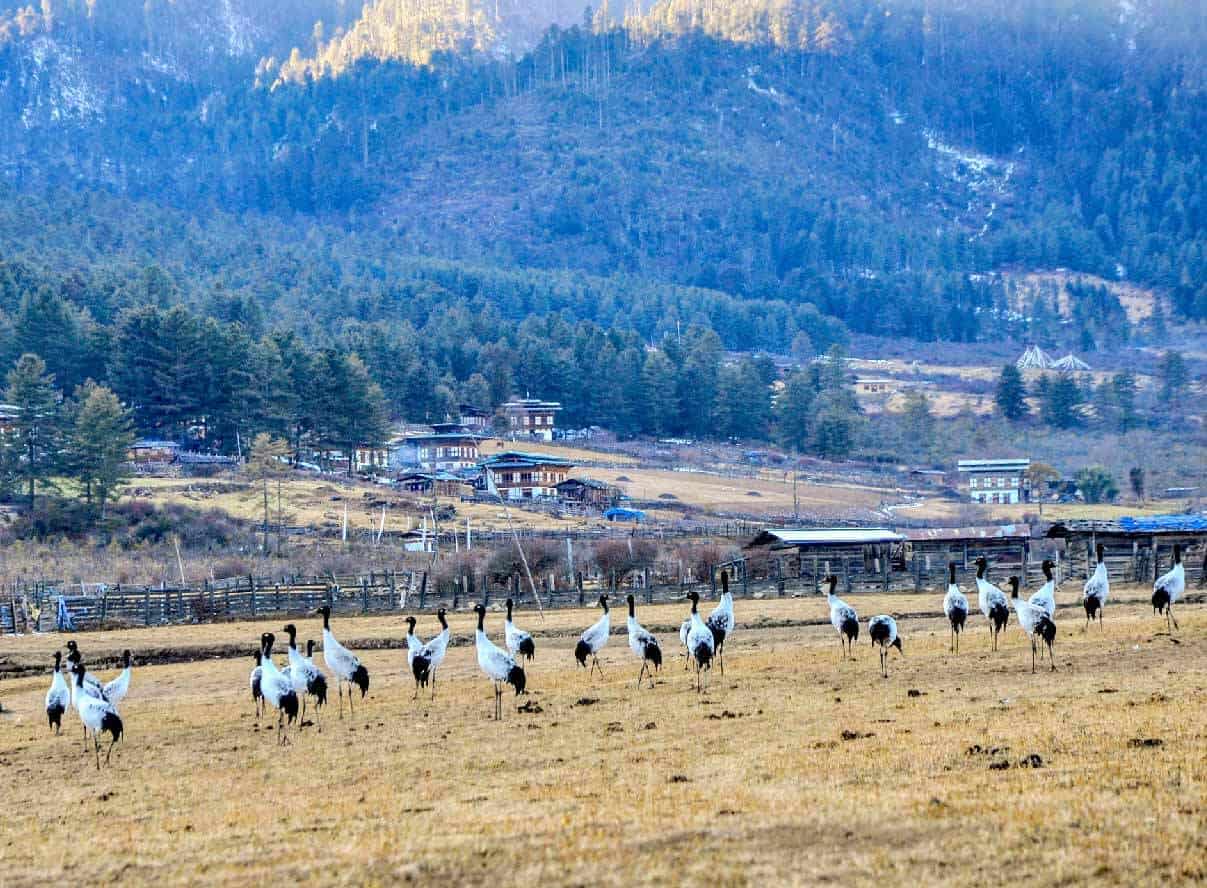
The defining moment is an early winter morning, when the frost lies white on the valley floor and the black-necked cranes rise from their roost in the marshes, calling as they fly. Around 500 of these endangered birds spend the winter in Phobjikha each year, arriving from the Tibetan Plateau in late October and leaving in February, and the Bhutanese regard them as sacred. Every year on 11 November, the monastery courtyard hosts the Black-Necked Crane Festival, with masked dances and songs to welcome them.
In the afternoon, the Gangtey Nature Trail leads down from the monastery through blue pine forest and across the valley, one of the most beautiful short walks in Bhutan. Return to the lodge as the light fades, sink into the hot stone bath, and finish the day by the fire, with the monastery's lamps glowing on the hill above.
Why Gangtey Lodge is one of the best mountain hotels
Bhutan has several very fine lodges in the Phobjikha Valley, but Gangtey Lodge earns its place for its intimacy and warmth. It is small enough that the staff quickly know your name and your plans, and the service, from the welcome song on arrival to the fire lit before dinner, is consistently praised by travellers. The design is rooted in local farmhouse tradition rather than imported luxury, and the lodge supports conservation in the valley, working with local partners and planting trees in the surrounding forest.
It makes a perfect pairing with COMO Uma Paro, our other Bhutan hotel, for a classic itinerary combining Paro, Thimphu, Punakha and Phobjikha. Plan two or three nights to enjoy the valley at an unhurried pace, especially in crane season. Pack warm layers, as nights are cold for much of the year, and allow a day to adjust to the altitude before any longer hikes.
When to go to Gangtey Lodge
Autumn, from October to early December, offers clear skies, crisp days and the arrival of the cranes, with the festival on 11 November. Winter, from December to February, is cold, with frost and occasional snow, but the valley is quiet and the cranes are present. Spring, from March to May, brings rhododendrons and wildflowers to the surrounding hills and mild walking weather. The summer monsoon, from June to September, brings rain and cloud but also lush green landscapes and few visitors.
Mountain Muses
New hotel listings and inspiration each week, direct from the mountains to your inbox
Questions, answered
- Where is Gangtey Lodge?
- Gangtey Lodge is in the Phobjikha Valley in central Bhutan, at around 3,000 metres, just below Gangtey Monastery. It is about five to six hours' drive from Paro International Airport.
- When can you see the black-necked cranes at Gangtey?
- The cranes winter in the Phobjikha Valley from late October to February. The Black-Necked Crane Festival is held at Gangtey Monastery every year on 11 November.
- Does Gangtey Lodge have a spa?
- Yes. A separate bath house offers traditional Bhutanese hot stone baths in a wooden tub for two, along with massages, which can also be taken in your suite.
- How many nights should I stay at Gangtey Lodge?
- Two or three nights is ideal, allowing time for the Gangtey Nature Trail, the monastery, the crane centre in season and the hot stone bath, without rushing the long drive in and out.
- Do you need a guide to visit Bhutan?
- Most international visitors travel on a planned itinerary with a licensed guide and driver and pay a daily Sustainable Development Fee. The lodge or your tour operator can arrange this.