A traditional ryokan known for its huge outdoor hot-spring baths along a mountain river, beautiful in autumn colour or under snow.
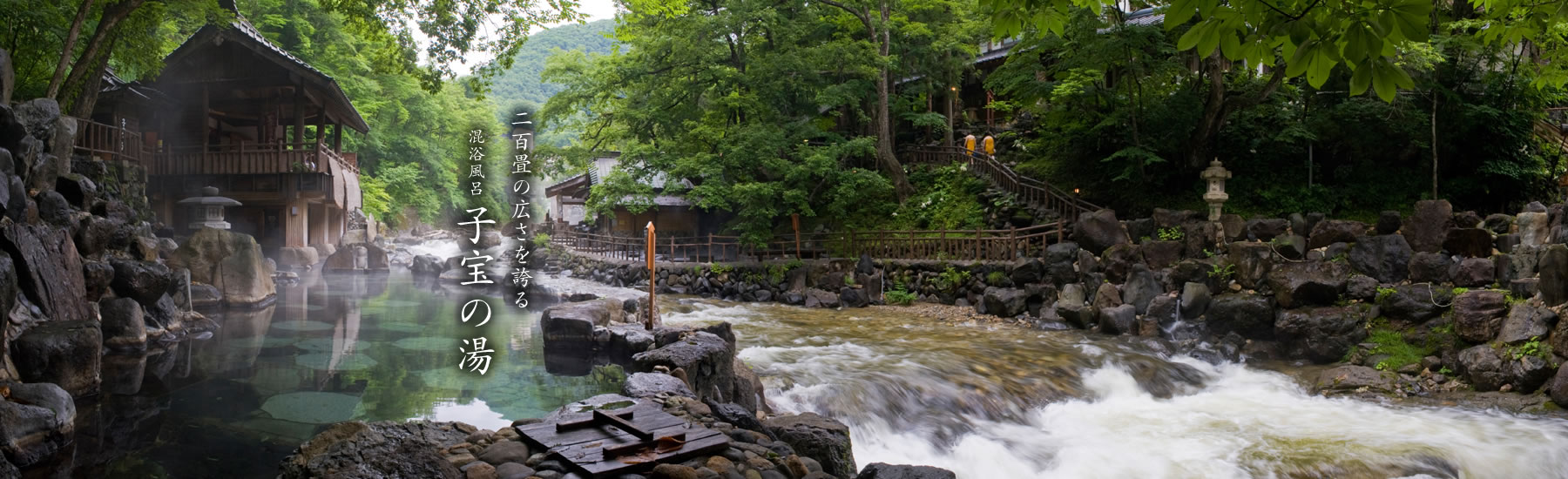
Takaragawa Onsen Osenkaku is a traditional ryokan in the mountains of Gunma, at the headwaters of the Tone River, and it is home to some of the largest outdoor onsen baths in Japan. Here a clear mountain stream runs between steep forested slopes, and along its banks wooden steps lead down to vast pools of steaming hot spring water. It is the only inn at this secluded hot spring, with timber buildings dating back to the 1930s, and it offers one of the most memorable onsen experiences in the country.
Location: Gunma, Japan
The ryokan lies in the Minakami area of northern Gunma, one of the prefecture's four great hot spring regions, about two and a half hours' drive north of Tokyo. By train, guests take the Joetsu Shinkansen to Jōmō-Kōgen station, around 70 minutes from Tokyo, or the local line to Minakami station; free shuttle buses run from both for overnight guests.
The surrounding mountains are part of the dramatic ridge between Gunma and Niigata, known for heavy winter snow. In autumn, the forests turn spectacular shades of red, orange and gold, and in winter, the baths are surrounded by deep snow. Minakami is also known for rafting, canyoning and skiing.
Rooms and suites at Takaragawa
The ryokan has around 40 rooms spread across three buildings, each with its own character. The First Annex was built in 1936 and the Main Building in 1955, both traditional wooden lodges; the East Building is more recent. Rooms are traditional Japanese, with tatami floors, sliding screens, low tables and futon bedding laid out in the evening, many with views over the river and forest.
Some rooms have private bathrooms and toilets, while others share facilities, so check when booking. Do not expect contemporary luxury: the appeal lies in authenticity, the rustic atmosphere and, above all, the baths.
Facilities at Takaragawa
The outdoor baths are the reason to come. There are four large open-air pools, totalling around 470 tatami mats or nearly 800 square metres, fed by four free-flowing hot spring sources and arranged along both banks of the river. The largest, Kodakara-no-yu, covers around 200 tatami mats. Three are mixed-gender baths, where everyone wears special bathing garments provided by the inn, making them accessible to visitors uncomfortable with traditional nude bathing; the fourth, Maya-no-yu, is reserved for women. There are also indoor baths.
Meals follow ryokan tradition, with dinner and breakfast served featuring seasonal mountain ingredients, river fish and local specialities. Day visitors can use the baths through the separate Takaragawa Sanso facility, so the inn is quietest in the early morning and evening, when only overnight guests remain.
The mountain moment
The defining experience is bathing in the outdoor pools as snow falls in winter, steam rising from the hot water, the river rushing past and the forested mountainside white with snow. Or, in autumn, soaking in the pools surrounded by blazing red maples. In every season, the sound of the river and the scale of the baths in their mountain gorge are unforgettable.
The best time is early morning or late evening, after day visitors have gone, when the lanterns are lit and you may have a vast pool almost to yourself.
Why Takaragawa is one of the best mountain hotels
Takaragawa Onsen Osenkaku earns its place in our Affordable stays collection because it offers one of Japan's most spectacular and authentic hot spring experiences at a reasonable price. Its riverside baths, set in a dramatic mountain gorge, are frequently listed among the finest outdoor baths in Japan.
It is a traditional, rustic ryokan rather than a luxury hotel, and it can be busy with day visitors at peak times. But for anyone wanting to experience the essence of Japanese mountain onsen culture, it is a must.
When to go to Takaragawa
Takaragawa is beautiful in every season, but two stand out. Winter, roughly December to March, brings deep snow around the baths, and soaking in the steaming pools as snow falls is the classic Takaragawa image; the Minakami area also has skiing nearby. Autumn, usually from mid-October to early November, is the other highlight, when the forest around the river turns blazing red and gold. Spring brings fresh green leaves and snowmelt rushing down the river, while summer is lush and cooler than Tokyo, with rafting and canyoning in Minakami. Weekends, national holidays and the autumn colour season are busiest with day visitors, so a midweek overnight stay gives you the quietest baths. Book a room with a private bathroom if that matters to you, as not all rooms have one, and plan to bathe early in the morning or late at night for the most peaceful experience.
Questions, answered
- Are the baths at Takaragawa mixed-gender?
- Three of the four outdoor baths are mixed, with special bathing garments provided by the inn. The fourth, Maya-no-yu, is reserved for women.
- How do you get to Takaragawa Onsen from Tokyo?
- Take the Joetsu Shinkansen to Jōmō-Kōgen, around 70 minutes from Tokyo, or the local line to Minakami. Free shuttle buses run from both stations for overnight guests.
- Do all rooms at Takaragawa have private bathrooms?
- No. Some rooms have private bathrooms and toilets, while others share facilities, so check when booking.