A restored kasbah beneath North Africa's highest peak, with rooftop terraces and a strong eco-ethos. Great for trekkers.
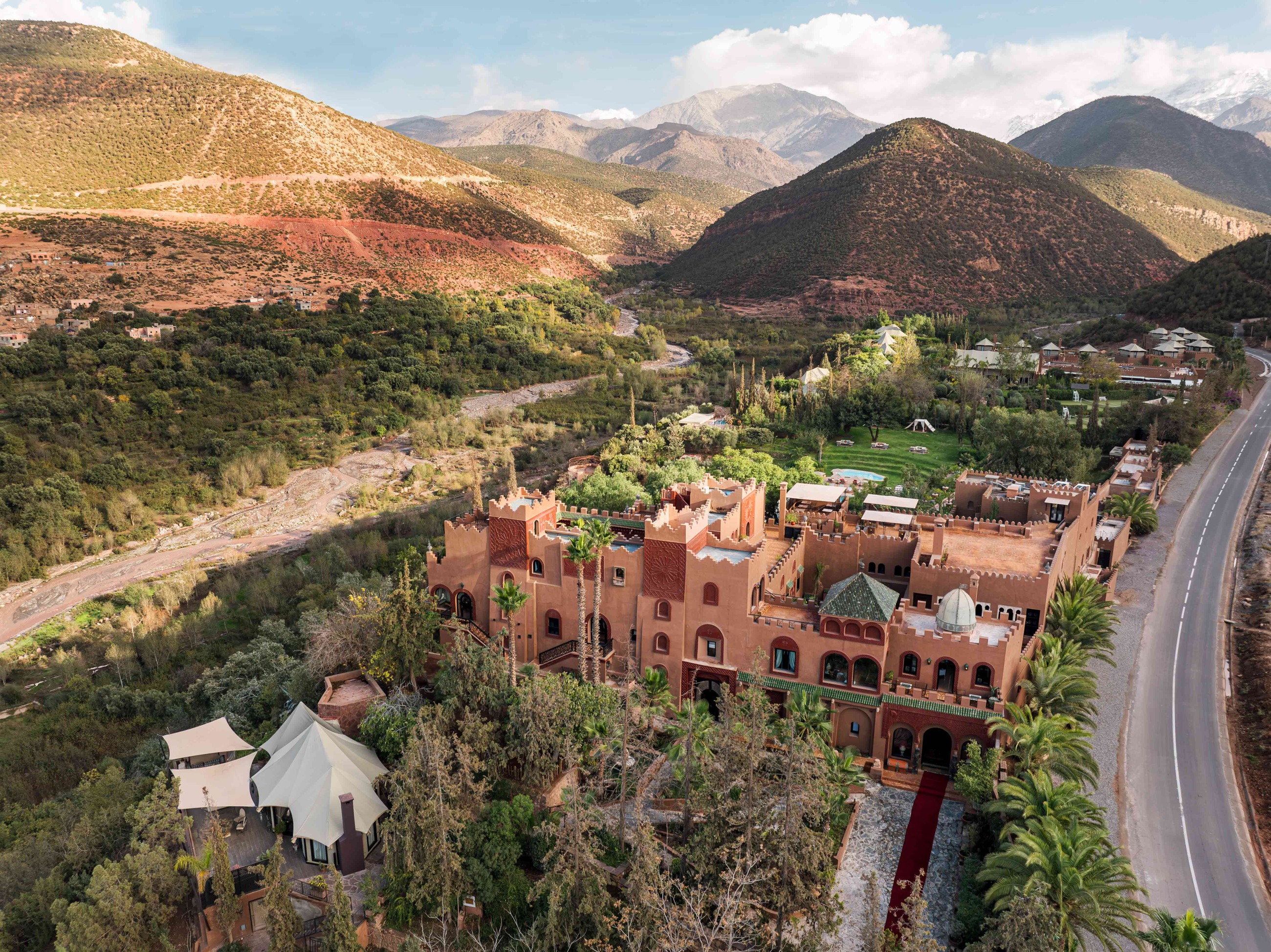
Kasbah du Toubkal is a mountain lodge in Morocco's High Atlas, perched on a rocky spur above the village of Imlil beneath North Africa's highest mountain, and the last part of the journey is on foot. You leave the car in Imlil, a mule takes your bags, and you climb for fifteen minutes through walnut and cherry orchards to the great wooden door of a walled kasbah. Once the home of a local chief and later a crumbling ruin, it was restored in the 1990s through a partnership between British founder Chris McHugo and local Berber Hajj Maurice. Today it is one of the world's pioneering responsible-travel lodges, and a magical place to stay.
Location: Atlas Mountains, Morocco
The Kasbah stands at around 1,800 metres in the Imlil valley of the High Atlas, within Toubkal National Park. Above it rises Jebel Toubkal, at 4,167 metres the highest peak in North Africa. The valley below is a patchwork of terraced fields and orchards of apple, cherry and walnut, dotted with Berber villages built of earth and stone.
Marrakech is only about 60 kilometres away, around 75 to 90 minutes by road, yet it feels like another world. The Kasbah is reached only on foot or by mule from Imlil, which adds to the sense of arrival. It is open all year, though spring and autumn are the best times for trekking.
Rooms and suites at Kasbah du Toubkal
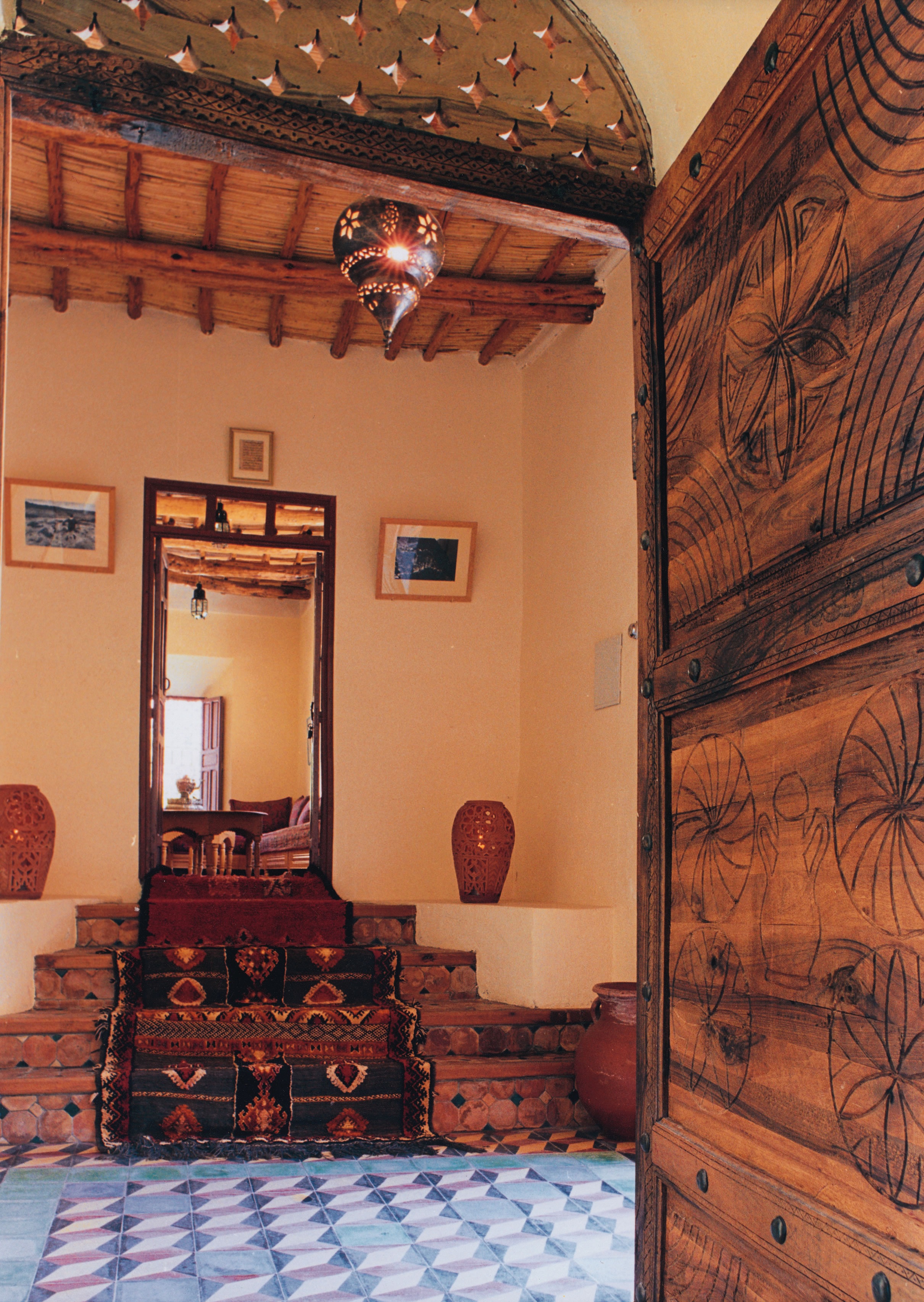
The Kasbah has a small number of rooms, built in traditional Berber style from local materials. They range from simple, comfortable Standard rooms, two of them tucked into the rooftop towers, to larger Superior and Deluxe rooms with terraces or balconies looking out over the mountains. All have en-suite bathrooms, and some can interconnect for families. A self-contained three-bedroom house is ideal for larger families or groups.
For budget travellers, there are also traditional Berber salons where guests can sleep on cushions in shared rooms, and the Kasbah's guesthouse in the village, Dar Imlil, offers simpler rooms with a pool. Rooms are rustic and lovely rather than luxurious; the view is the luxury.
Facilities at Kasbah du Toubkal
The rooftop terraces are the heart of the Kasbah, with 360-degree views across the valley to the peaks. Meals are served here or in the dining room: set menus of tagines, couscous, salads and fresh bread, made with organic produce from nearby farms. Out of respect for the local Muslim community, alcohol is not served, but guests may bring their own.
There is a traditional hammam, a library, gardens and Berber salons for relaxing, plus a new pool, courtyard and rooftop terrace added recently after repairs following the 2023 earthquake. Treks are the main activity, from gentle walks to Berber villages to multi-day treks and guided ascents of Toubkal, with mules to carry the luggage. The Kasbah also runs a four-room trekking lodge deeper in the mountains.
The Kasbah's social commitment is remarkable. All staff come from the local Berber community, and a 5% levy on guest bills funds village projects, including an ambulance, rubbish collection, a community hammam and safe water, as well as Education For All, a charity that runs boarding houses so girls from remote mountain villages can attend secondary school.
The mountain moment
The defining moment is sunset on the rooftop terrace, mint tea in hand, as the light turns the snow on Toubkal pink and gold and the valley below fills with shadow and the sound of the evening call to prayer from the villages. On clear nights, guests can even borrow bedding and sleep on the roof under the stars.
For the adventurous, the ultimate experience is to climb Jebel Toubkal itself, usually over two days with a night in a mountain refuge, reaching the summit at dawn with views across the Atlas to the Sahara.
Why Kasbah du Toubkal is one of the best mountain hotels
Kasbah du Toubkal earns its place in our Affordable stays collection because it offers an extraordinary setting, authentic Berber hospitality and one of the most inspiring examples of community-focused tourism anywhere, at a reasonable price. Its stunning rooftop views have even made it a film location: it stood in for Tibet in Martin Scorsese's *Kundun*.
It is rustic rather than luxurious, and reaching it involves a short uphill walk. But for trekkers, nature lovers and anyone who wants their stay to benefit the people who live there, it is a truly special place.
When to go to Kasbah du Toubkal
The Kasbah is open all year, but spring and autumn are the best times for trekking, with mild days, clear skies and blossom in the orchards in spring. Summer is hot in Marrakech but noticeably cooler in the Imlil valley, making it a welcome escape, though midday treks can be tiring. Winter brings snow to Toubkal and cold nights, but crisp, beautiful days and quiet trails; an ascent of Toubkal in winter requires proper equipment and an experienced guide. Ramadan dates shift each year, so check them if you plan to visit then.
Questions, answered
- How do you get to Kasbah du Toubkal?
- Drive from Marrakech, about 75 to 90 minutes, to the village of Imlil. From there it is a fifteen-minute walk uphill, with a mule to carry your bags.
- Does Kasbah du Toubkal serve alcohol?
- No, out of respect for the local Muslim community, but guests may bring their own.
- Can you climb Toubkal from the Kasbah?
- Yes. Guided ascents of Jebel Toubkal, usually over two days with a night in a mountain refuge, can be arranged from the Kasbah.