Hoshinoya Fuji is Japan's first luxury glamping resort, a cluster of minimalist cabins on a forested hillside above Lake Kawaguchi, each with a huge picture window framing Mount Fuji. Created by Hoshino Resorts, it reimagines camping as something calm, stylish and deeply connected to nature, with a terrace among the trees, crackling campfires and a sense of adventure, all within easy reach of Tokyo.
Hoshinoya Fuji is Japan's first luxury glamping resort, a cluster of minimalist cabins on a forested hillside above Lake Kawaguchi, each with a huge picture window framing Mount Fuji. Created by Hoshino Resorts, it reimagines camping as something calm, stylish and deeply connected to nature, with a terrace among the trees, crackling campfires and a sense of adventure, all within easy reach of Tokyo.
Location: Lake Kawaguchi, Mount Fuji, Japan
The resort sits in a red pine forest on the slopes above Lake Kawaguchi, one of the Fuji Five Lakes, at the northern foot of Mount Fuji in Yamanashi Prefecture. Tokyo is roughly two hours away by car or by train and bus, making it one of the easiest mountain escapes from the capital.
Mount Fuji, at 3,776 metres Japan's highest mountain, is a UNESCO World Heritage cultural site and one of the most recognisable peaks on Earth. Around the lake, viewpoints, shrines and museums celebrate its place in Japanese art and spirituality.
The area around Lake Kawaguchi is one of the most popular viewpoints for Fuji, and the town at the lakeshore has become a busy destination in its own right, with hotels, onsen baths and restaurants. Staying at Hoshinoya, in the quiet forest above, gives you the views without the crowds, and the resort's team can help plan excursions around the Fuji Five Lakes.
Rooms and suites at Hoshinoya Fuji
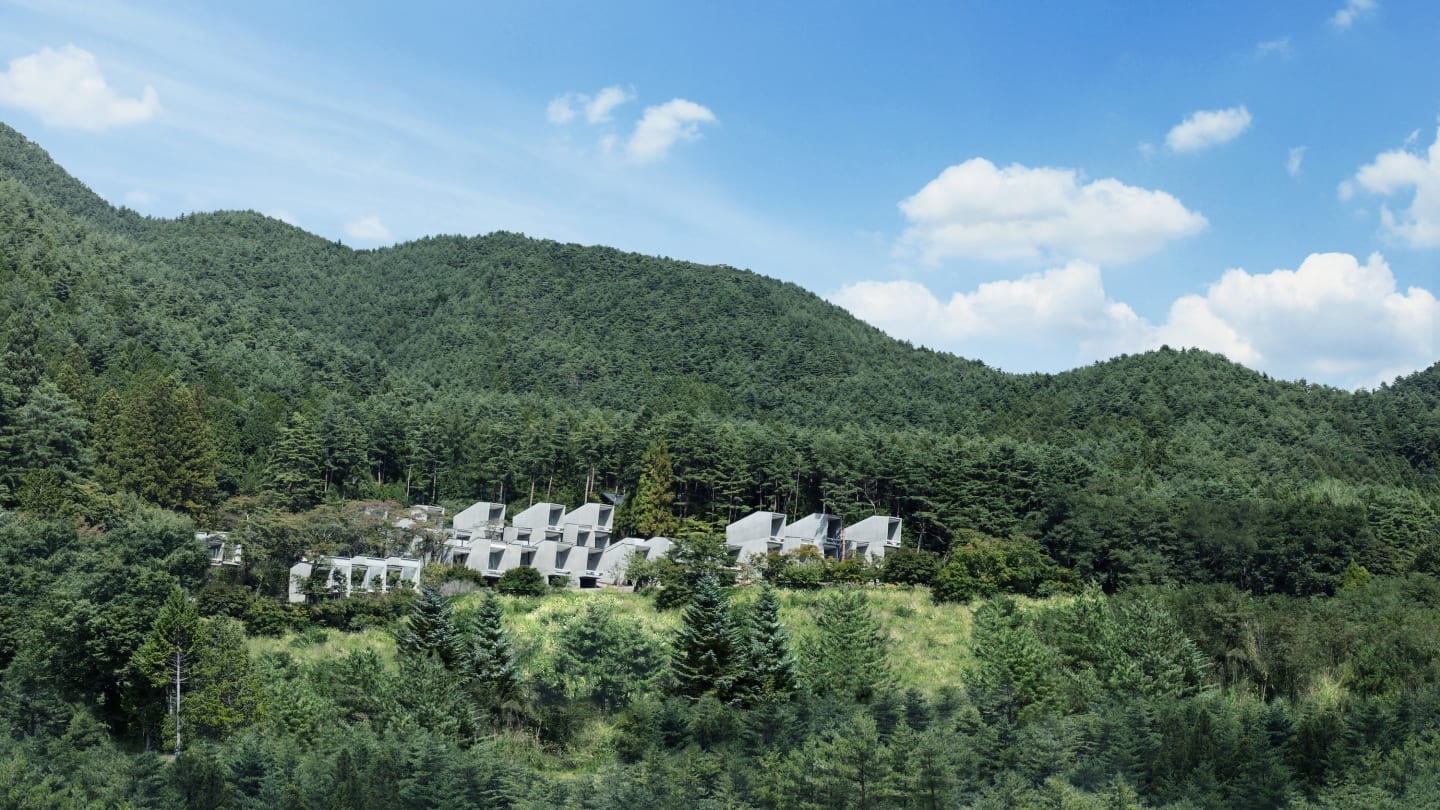
There are 40 cabins, stacked down the hillside in clean, grey concrete cubes, each oriented towards the lake and the mountain. Floor-to-ceiling windows frame the view so completely that Fuji is visible from bed on a clear morning, and each cabin has a large terrace with a fireplace or wood-burning stove for cool evenings.
Interiors are simple and elegant, with natural wood and soft textiles, designed to direct your attention outward. On arrival, guests receive a rucksack containing binoculars, a map and other outdoor essentials, setting the tone for a stay spent largely outdoors.
The cabins come in a few sizes, from cosy rooms for couples to larger options for families or small groups, and all share the same clean, contemporary style. The design is deliberately pared back, so that the mountain, the lake and the forest remain the focus throughout your stay.
Facilities at Hoshinoya Fuji
The heart of the resort is the Cloud Terrace, a network of wooden decks and platforms built among the pine trees, with hammocks, sofas and canvas canopies, where guests can read, relax or warm up by the fire. In the evening, the terrace becomes a place to gather around campfires and look at the stars.
Dining is designed around the forest. The restaurant, with an open kitchen, serves reimagined Japanese dishes, and outdoor ovens and fires turn out pizzas, quiches and grilled dishes, with local ingredients from Yamanashi. Activities include early-morning canoe trips on Lake Kawaguchi, forest walks, cycling, horse riding and stargazing sessions.
The atmosphere is relaxed and unhurried. Staff, known as glamping masters, lead activities and help guests make the most of the outdoors, from lighting a campfire to choosing the best spot for stargazing, and the evening bonfire, with hot drinks and the forest around you, is one of the most memorable parts of a stay.
The mountain moment
The defining moment is dawn, when the first light catches the snowy summit of Fuji and the lake below turns pale blue and silver. From your cabin, or from a canoe gliding across the still water, the mountain seems close enough to touch.
For the classic view, visit the Chureito Pagoda, a short drive away, where a five-storey pagoda stands against the cone of Fuji; it is especially beautiful during cherry blossom in spring and maple season in autumn.
Why Hoshinoya Fuji is one of the best mountain hotels
Hoshinoya Fuji earns its place because it combines design, nature and one of the world's most famous mountains in an original and memorable way. It is not a traditional ryokan, and its glamping concept may not suit those looking for classic Japanese hospitality, but it offers something fresh and unique. For a stylish, outdoorsy escape from Tokyo with Mount Fuji as your neighbour, it is a superb choice.
When to go to Hoshinoya Fuji
Late autumn and winter, roughly November to February, offer the clearest views of Mount Fuji, often with snow on the summit and crisp, cold mornings. Spring brings cherry blossom around the lake, usually in April, and autumn colour peaks around November. Summer is warm and green but often hazy, with Fuji frequently hidden by cloud; the official climbing season on the mountain runs from early July to early September. Weekends and Japanese holidays are busiest, so book early.
Questions, answered
- Can you see Mount Fuji from Hoshinoya Fuji?
- Yes. Every cabin faces Lake Kawaguchi and Mount Fuji, with floor-to-ceiling windows. Views are clearest from late autumn to early spring.
- How far is Hoshinoya Fuji from Tokyo?
- Roughly two hours by car, or by train and bus to the Lake Kawaguchi area.
- Is Hoshinoya Fuji a ryokan?
- No. It is a luxury glamping resort, with cabins, a forest terrace and outdoor activities, rather than a traditional ryokan.