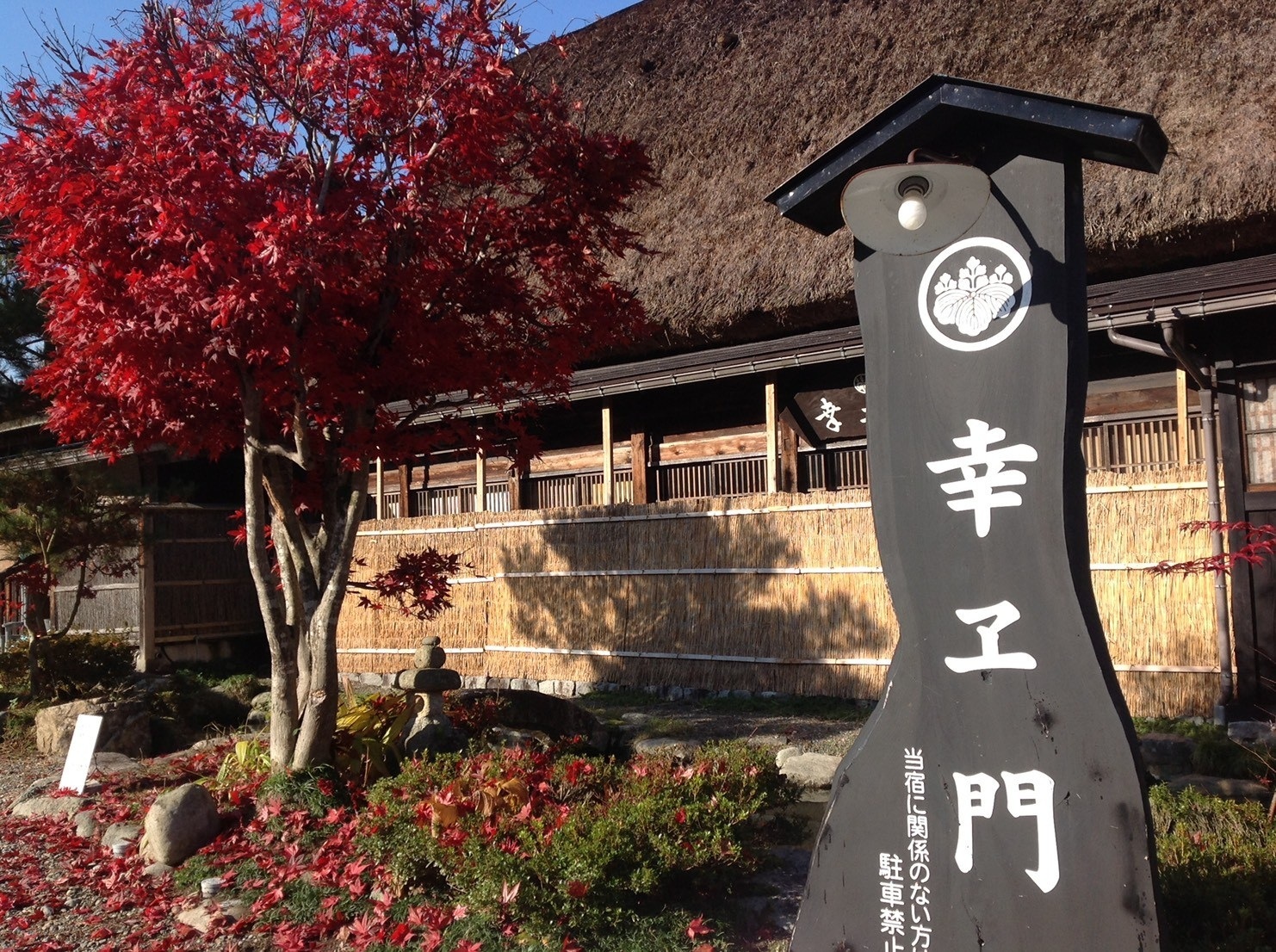
Koemon is a family-run minshuku, or guesthouse, in a centuries-old thatched farmhouse in Shirakawa-go, the fairytale village in the mountains of central Japan. Its steep straw roof, built in the gassho-zukuri style, said to resemble hands joined in prayer, is designed to shed the region's heavy winter snow. Staying overnight in one of these houses, eating dinner around a sunken hearth, is one of the most memorable experiences in rural Japan.
Koemon is a family-run minshuku, or guesthouse, in a centuries-old thatched farmhouse in Shirakawa-go, the fairytale village in the mountains of central Japan. Its steep straw roof, built in the gassho-zukuri style, said to resemble hands joined in prayer, is designed to shed the region's heavy winter snow. Staying overnight in one of these houses, eating dinner around a sunken hearth, is one of the most memorable experiences in rural Japan.
Location: Shirakawa-go, Japan
Koemon stands in Ogimachi, the main village of Shirakawa-go, in Gifu Prefecture, in a remote valley of the Japanese Alps, a short walk from the village's suspension bridge and bus centre. Shirakawa-go and the nearby Gokayama villages are a UNESCO World Heritage Site, preserving a way of life that once depended on silkworm farming and rice in a land of deep snow.
Buses connect Shirakawa-go with Takayama, about 50 minutes away, and Kanazawa, about 75 minutes, and from Toyama and Nagoya. In winter, cars cannot reach the property, so guests should arrive by bus.
The village sits along the Sho River, surrounded by steep, forested mountains, with more than a hundred gassho-zukuri houses scattered among rice paddies, vegetable plots and small shrines. Several of the larger farmhouses, such as the Wada House, are open as museums, offering a fascinating glimpse into the lives of the families who built them.
Rooms and suites at Koemon
The farmhouse dates from the Edo period, and it has five Japanese-style guest rooms, with tatami floors and futon bedding laid out in the evening. Rooms are simple and traditional, and the bathroom and toilets are generally shared, so check the details when booking.
The house is run by the Otani family, who have welcomed guests for decades. The hosts speak basic English, and their warmth and hospitality are a highlight for many visitors.
Staying in a minshuku is quite different from a hotel or ryokan: it is more like staying in a family home, with shared spaces, house rules and a strong sense of community among guests, who often share stories around the hearth after dinner. Many visitors say it is the highlight of their trip to Japan.
Facilities at Koemon
Dinner and breakfast are served in the irori room, where guests gather around a traditional sunken hearth, with a fire burning beneath a hanging kettle. Meals feature local, Japanese-style home cooking, often including river fish grilled by the fire, mountain vegetables and Hida beef, and vegetarian meals can be arranged.
The family bath is available in the evening, and guests receive a pass to a nearby public hot spring. There is a curfew in the evening, as is common in minshuku, so plan your dinner and bath times accordingly. Prices are modest, typically per person and including dinner and breakfast.
Because the village is a living community, guests are asked to respect local customs: keeping noise down at night, not entering private property and taking care with fire, which is a constant danger to the thatched houses. Smoking is not permitted in the village outside designated areas.
The mountain moment
The defining moment is the village at night, after the day visitors have left on the last buses. The lanes fall silent, the thatched roofs are silhouetted against the mountains, and the warm glow of lamps shines from the farmhouse windows. In winter, with snow piled high on the roofs, it is utterly magical.
For the classic view, walk up to the Shiroyama viewpoint, above the village, where the whole valley of thatched houses, rice fields and forested mountains unfolds below.
Why Koemon is one of the best mountain hotels
Koemon earns its place in our Affordable stays collection because it offers an authentic, unforgettable night in one of Japan's most beautiful mountain villages, at a very reasonable price. It is simple, with shared facilities, early curfews and limited English. But for travellers who want to experience traditional rural Japan, and to see Shirakawa-go at its quietest, it is a treasure.
Few places in Japan show so clearly how people lived with the mountains: the gassho houses were built to house large extended families, with silkworms raised in the attic floors, and their roofs are still re-thatched by the whole community working together.
When to go to Koemon
Shirakawa-go is beautiful in every season. Winter, from December to February, brings deep snow and the famous illumination events, when the village is lit up at night; these are hugely popular and book out far in advance. Spring brings fresh green rice paddies and blossom, summer is lush and warm, and autumn, in late October and early November, brings golden and red foliage. Book early, as there are only five rooms.
Questions, answered
- How old is the Koemon farmhouse?
- It dates from the Edo period, which ran from 1603 to 1868, and is built in the traditional gassho-zukuri thatched style.
- Do the rooms at Koemon have private bathrooms?
- Bathrooms and toilets are generally shared. Guests also receive a pass to a nearby public hot spring.
- How do you get to Shirakawa-go?
- By bus from Takayama, about 50 minutes, or Kanazawa, about 75 minutes. In winter, cars cannot reach the guesthouse.