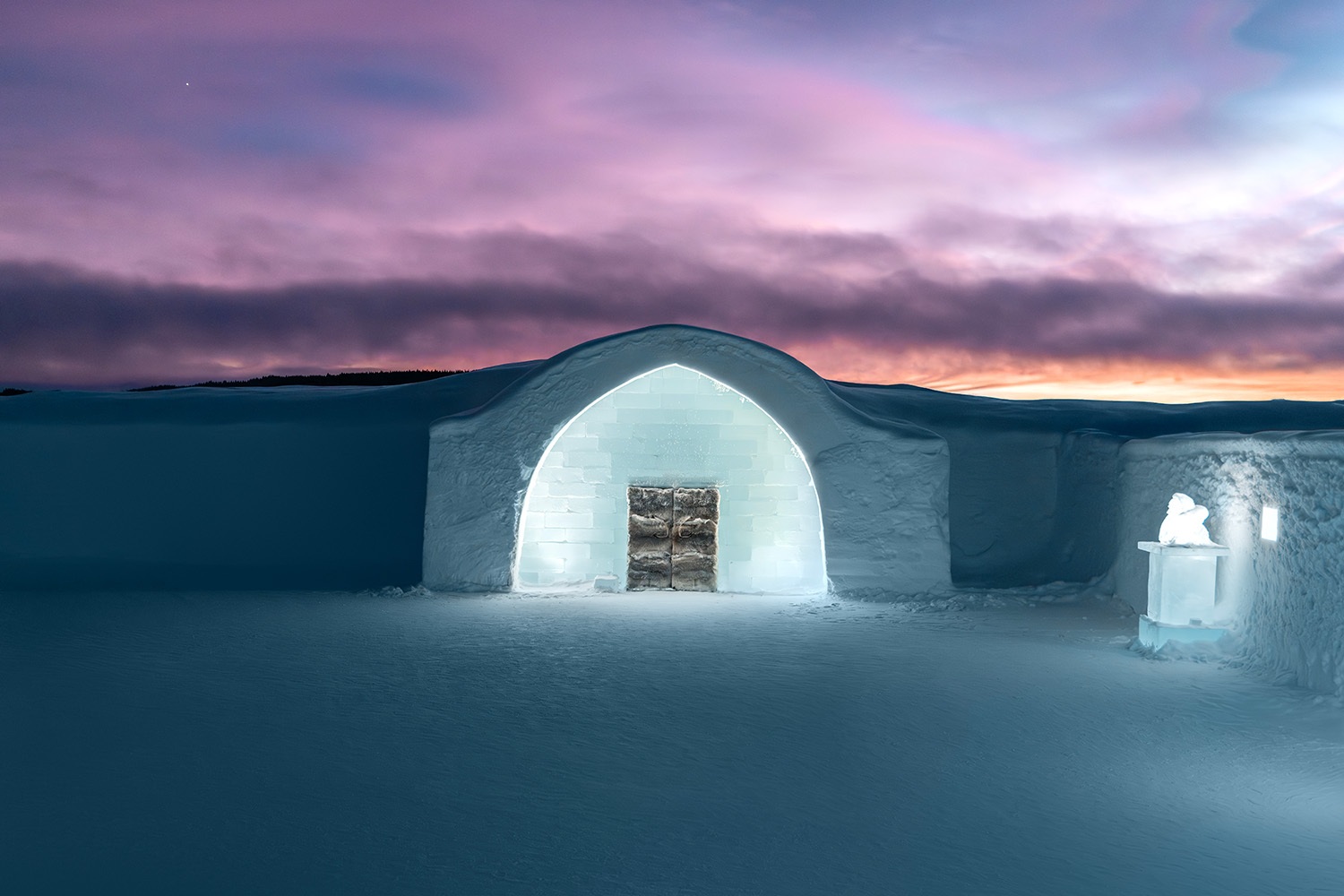
Icehotel in Jukkasjärvi is the original ice hotel, and one of the most extraordinary places to sleep anywhere. Every winter since 1989, artists from around the world have carved a new hotel from blocks of ice harvested from the frozen Torne River, creating suites that are part bedroom, part sculpture. In spring the building melts back into the river, and the cycle begins again. Alongside it, Icehotel 365 keeps a collection of ice art suites frozen all year round.
Icehotel in Jukkasjärvi is the original ice hotel, and one of the most extraordinary places to sleep anywhere. Every winter since 1989, artists from around the world have carved a new hotel from blocks of ice harvested from the frozen Torne River, creating suites that are part bedroom, part sculpture. In spring the building melts back into the river, and the cycle begins again. Alongside it, Icehotel 365 keeps a collection of ice art suites frozen all year round.
Location: Jukkasjärvi, Swedish Lapland
Jukkasjärvi is a small village on the banks of the Torne River in Swedish Lapland, about 200 kilometres north of the Arctic Circle. The mining town of Kiruna, with flights from Stockholm, is a short drive away. The surrounding landscape is one of forests, frozen rivers and, to the west, the mountains of the Swedish fells, including Kebnekaise, Sweden's highest peak.
The village has a long history as a Sámi meeting place and trading post, and its wooden church is one of the oldest in Lapland. The resort's Old Homestead restaurant occupies a timbered building dating from 1768.
Getting there is part of the adventure. In winter, the drive from Kiruna crosses a snow-covered landscape of forest and frozen lakes, and guests can arrange transfers by dog sled or snowmobile for a truly memorable arrival. The Torne River, which flows past the hotel, is famous for the purity of its water, which is what gives the hotel's ice its remarkable clarity.
Rooms and suites at Icehotel
Guests can choose between cold rooms and warm rooms. The ice rooms of the winter Icehotel, open from December to April, include a dozen or so Art Suites, each designed by a different artist, alongside simpler ice rooms. Temperatures inside hover between minus five and minus eight degrees Celsius, and guests sleep on reindeer hides in expedition-grade sleeping bags. Icehotel 365, a permanent building, has nine themed Art Suites, plus Deluxe Suites with their own warm bathrooms and saunas.
Most guests spend one night on ice and the rest of their stay in the warm rooms: Kaamos hotel rooms, Arctic Cabins and Nordic cabins, plus heated lávvu tents. This is the recommended way to experience the hotel.
Each winter's Art Suites are different, as artists, designers and architects from around the world are selected to create new rooms every year. Some are playful, others abstract or dramatic, and walking through the hotel before bedtime, exploring each suite, is like visiting a gallery that exists for only a few months.
Facilities at Icehotel
Dining ranges from the Icehotel Restaurant, serving lunch and dinner with Lappish ingredients, to the historic Old Homestead, The Veranda and The Lounge. The Icebar, where drinks are served in glasses made of ice, is a must.
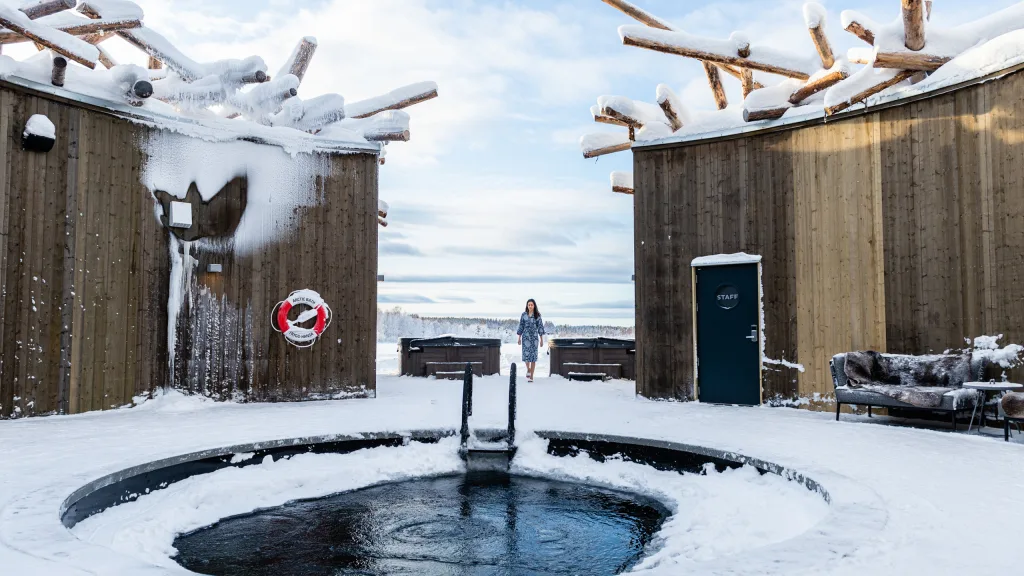
Saunas, including a riverside sauna, are the perfect way to warm up after a night on ice. Activities change with the seasons: dog sledding, snowmobiling, ice sculpting classes, reindeer encounters, Sámi cultural experiences and Northern Lights tours in winter; river rafting, fishing, hiking and midnight sun excursions in summer.
Guests who sleep in the ice rooms are given a thorough briefing on how to stay warm, along with thermal clothing and access to heated changing rooms, showers and saunas in a nearby warm building. Many find the experience surprisingly comfortable, and the morning sauna is one of the great pleasures of a stay.
The mountain moment
The defining moment is waking in an ice suite, wrapped in your sleeping bag, as the soft blue light filters through the walls, then being brought a cup of hot lingonberry juice before heading straight to the sauna. It is an experience that stays with you for life.
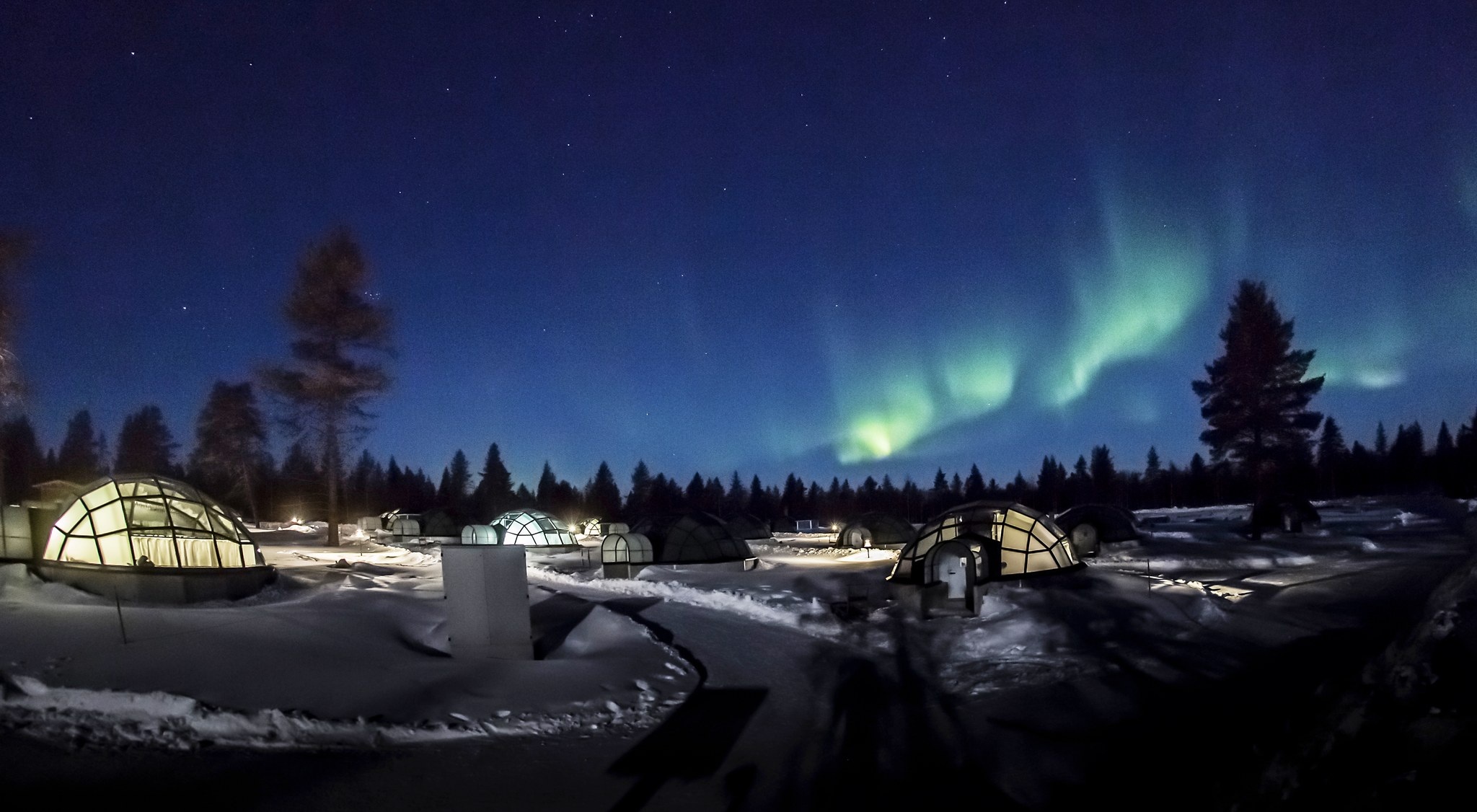
At night, step out onto the frozen Torne River, away from the lights, and look up: on clear winter nights, the Northern Lights often swirl across the sky above the village.
Why Icehotel is one of the best mountain hotels
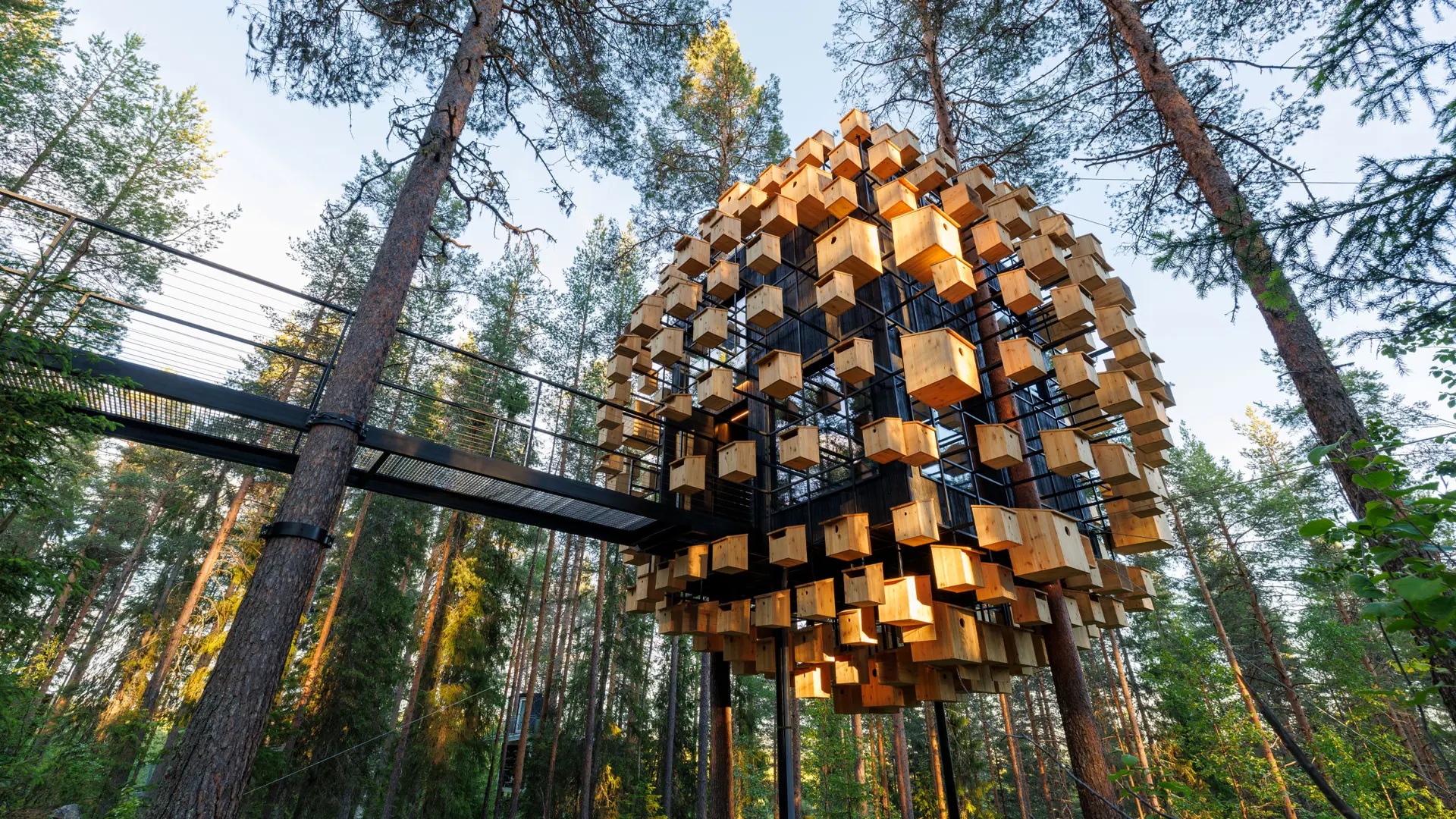
Icehotel earns its place because it is one of the most original and creative hotels on Earth, a constantly changing gallery of ice art in a wild Arctic setting. It is not a mountain hotel in the strict sense, and nights on ice are cold, but the combination of art, nature and adventure is unique. It pairs perfectly with Treehotel and Arctic Bath, further south, for a journey through Swedish Lapland.
When to go to Icehotel
The winter Icehotel, with its seasonal art suites, is open from around December to April; the newest suites are unveiled each December. The darkest months, from December to February, bring the best Northern Lights and the coldest temperatures. March and April offer longer, brighter days and still-cold nights, a great time for families. Icehotel 365 means you can sleep in an ice suite even in summer, when the midnight sun shines through the night, from around late May to mid-July.
Questions, answered
- How cold is it inside the Icehotel?
- The ice rooms hover between minus five and minus eight degrees Celsius. Guests are given expedition-grade sleeping bags, and most spend one night on ice and the rest in warm rooms.
- Is the Icehotel open all year?
- The winter Icehotel is open from around December to April, but Icehotel 365 keeps ice art suites frozen year-round.
- How do you get to the Icehotel?
- Fly to Kiruna, which has flights from Stockholm. Jukkasjärvi is a short drive from the airport.